

The most consequential AI in your organization isn’t the one your board approved. It’s the twenty to fifty AI deployments running quietly across departments—from marketing personalization to loan automation, voice analytics to IT assistance—making thousands of decisions daily that your executive team has never governed.
A Fortune 500 financial services CEO discovered this the uncomfortable way. During a routine strategy session, her CIO mentioned “optimizing our AI stack.” The CEO paused. “What AI stack?”
The inventory revealed Microsoft Copilot deployed across 2,000 employees; an AI-powered CRM personalizing offers for 100,000 customers each month; voice analytics scoring 50,000 contact center interactions; customer-facing chatbots handling inquiries; and 15 robotic process automation agents approving loans, flagging fraud, and routing exceptions across the lending workflow. Total unified governance framework? Zero.
Her response wasn’t panic—it was recognition. “We’ve accidentally built an AI-first operation while our governance structure still thinks AI is a future planning exercise.”
This is the defining challenge of enterprise AI in 2025: organizations don’t have an AI adoption problem. They have an AI recognition problem.
How Shadow AI Became Your Strategic Advantage
Here’s what happened while boards debated AI strategy: marketing deployed AI-powered personalization; contact centers upgraded to voice analytics and emotion detection; finance automated loan workflows and exception handling; and IT adopted Copilot for productivity. Each decision passed standard IT procurement protocols, and each vendor provided the necessary security certifications.
Nobody asked the consequential questions: What happens when our chatbot gives incorrect financial advice? How do we audit AI-driven performance scoring? Can we explain why an AI agent declined a loan? Who ensures that the performance of our AI system meets our risk appetite?
The gap isn’t technological—it’s architectural. Most enterprises have built sophisticated data governance over the past decade. Clear ownership. Quality standards. Privacy controls. They govern data brilliantly.
Data governance must answer, “Is our data accurate and secure?” AI governance must answer, “Does our algorithm treat people fairly? Can we explain its decisions? How do we ensure trustworthiness throughout the AI lifecycle?”
An organization can have exemplary data governance and simultaneously lack any framework for algorithmic accountability. That’s not a failure—it’s a category error.
The Agentic AI Imperative
The governance gap just became exponentially more urgent—and the cost of inaction has become quantifiable.
Traditional software executes instructions. AI interprets goals and chooses its own methods. Traditional systems fail predictably. AI fails in ways we discover only after deployment.
Recent research revealed a stunning paradox: only 6% of organizations trust AI agents to handle core business processes, yet 72% believe the benefits outweigh the risks. That 66-point gap represents both market opportunity and financial risk.
Organizations that build trustworthy AI systems enabling autonomous operations at scale will capture risk-adjusted returns competitors can’t match. The ROI calculation is stark: the cost of implementing responsible AI policies and processes is a fraction of the cost of non-compliance or algorithmic failure in production.
Why Locking Down Shadow AI Is Strategic Malpractice
The conventional approach treats shadow AI as a compliance risk requiring remediation. Lock it down. Audit it. Potentially shut it down.
That’s economically inefficient.
Organizations discovering extensive ungoverned AI haven’t failed—they’ve succeeded at distributed innovation.
Shadow AI is proof of innovation appetite, early adopters throughout the enterprise, working AI infrastructure already integrated into operations, and demonstrated ROI from tactical implementations.
That’s not a problem to solve. That’s a foundation to build on.
The Strategic Architecture
Organizations getting this right are building responsible AI frameworks that govern the complete AI lifecycle while enabling cost-effective deployment at scale.
First, they achieve comprehensive visibility. Not auditing for violations—mapping for strategic intelligence. Which business units lead innovation? Which AI actors are making consequential decisions? Federal agencies recently discovered they had three to five times more AI than leadership believed. That visibility gap is strategic blindness with measurable bottom-line impact.
Second, they classify by consequence, not complexity. A chatbot answering FAQs requires different oversight than one providing financial advice. The question isn’t “Is this AI sophisticated?” but “What’s the financial cost if this AI system’s performance degrades?”
Third, they build cross-functional governance integrating technical feasibility, algorithmic accountability, regulatory interpretation, enterprise risk appetite, and business value creation. AI governance fails when owned by IT alone, Legal alone, or Risk alone.
Fourth, they establish policies and processes that govern the AI lifecycle from design through deployment to decommissioning—addressing fairness, transparency, accountability, and safety as operational requirements with measurable controls.
Fifth, they flip the narrative. Governance isn’t what slows AI down. Governance is what allows AI to scale cost-effectively. Trust architecture enables velocity while protecting both top-line revenue and bottom-line margins.
The C-Suite Evolution
The Chief AI Officer role emerging in 2025 builds trust architecture: frameworks that enable rapid deployment of trustworthy AI systems while maintaining stakeholder confidence and managing enterprise risk.
This is where the Chief AI Officer role shifts from technology oversight to enterprise trust stewardship.
The distinction matters. A CDO ensures AI accesses quality data. A CAIO ensures AI uses that data to make decisions the organization can explain, defend, and stand behind when regulators, customers, or boards ask hard questions about AI trustworthiness.
They understand that every AI actor—from data scientists to business users—requires clear policies, processes, and accountability frameworks. And they can articulate the ROI: governed AI deployments achieve faster time-to-value because they avoid costly retrofitting of controls after incidents occur.
The Strategic Choice
Every organization faces the same decision: establish AI governance as a strategic enabler or implement it as a crisis response.
Organizations that build responsible AI governance proactively can accelerate deployment while reducing risk. Organizations waiting for the incident or audit will retrofit controls at 3-5x the cost with measurable opportunity loss.
The paradox: organizations most concerned about governance moving too slowly are usually the ones without governance frameworks at all. Organizations with robust governance deploy AI most aggressively—because they’ve built the trust architecture that enables speed while ensuring AI system performance meets enterprise standards.
Shadow AI isn’t your governance failure. It’s your latent strategic capability waiting for orchestration. The organizations that recognize this—that build frameworks to inventory, govern, and accelerate distributed AI innovation while ensuring AI trustworthiness throughout the AI lifecycle—will define competitive advantage in the AI economy.
The future doesn’t belong to organizations that move fastest on AI. It belongs to organizations that move fastest with governance—because they’re the only ones that can sustain velocity without crashing.
The question isn’t whether to govern AI. It’s whether you’ll build governance before or after you need it—and whether you’ll treat it as a strategic investment or regulatory expense.
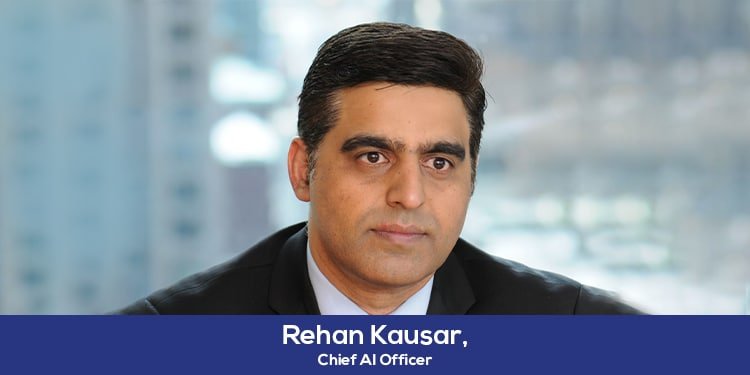
Bio: Rehan Kausar is the Chief AI Officer at Hudson Valley Credit Union and an AI governance leader focused on transforming enterprise AI from an operational risk into a strategic capability through responsible AI frameworks that ensure trustworthiness across the AI lifecycle.
Explore more AI articles:
Mike Allison: AI Doesn’t Fix Execution Problems—It Exposes Them
Why Clean CRM Data is the Key to Unlocking AI’s Potential
AI is Shaping Fintech’s Future—But Deepfakes Pose New Fraud Risks