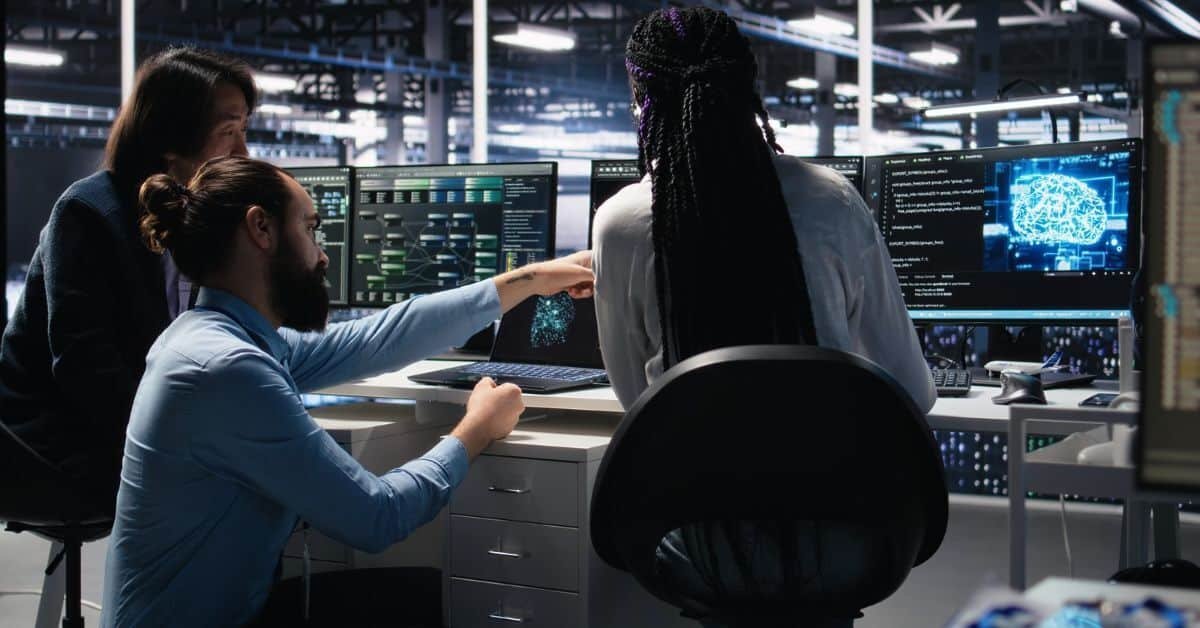
Modern AI data centers face a challenge that traditional facility planning struggles to address. Each new generation of GPU servers increases computing demands and often requires substantial changes to existing infrastructure.
Engineers need to understand how these upgrades affect facility performance before they install expensive equipment. As a result, digital twins are now rising in AI data centers. The technology gives IT teams a more detailed understanding of how their facilities behave under demanding workloads.
Digital Twins Go Beyond Traditional 3D Models
A conventional 3D model shows the physical arrangement of equipment inside a data center. Engineers use these visual representations to understand floor layouts and identify where they can fit new hardware.
Digital twins take this concept further by linking virtual models to operational data. The software incorporates equipment specifications and uses simulation models to calculate how infrastructure performs under different conditions.
For example, operators examine how a proposed GPU rack affects temperatures in surrounding aisles. Rather than relying entirely on equipment specifications, they simulate the added heat and evaluate how the cooling system responds.
AI Infrastructure Is Changing Facility Planning
Traditional data centers often distribute computing workloads across numerous racks with relatively predictable infrastructure requirements. High-density AI installations create different challenges because GPU clusters concentrate substantial computing capacity within smaller areas.
A facility that comfortably supports conventional enterprise servers won’t necessarily accommodate newer rack-scale AI systems. Adding more GPUs increases electrical demand, while their concentrated heat output changes cooling requirements.
These differences explain why digital simulation plays an increasingly important role in infrastructure planning.
Live Operational Data Makes Simulations Useful
A digital twin needs reliable information to reflect actual facility conditions. Engineers typically begin with existing infrastructure models and connect relevant operational data sources.
Modern data centers already collect considerable information through building management systems and infrastructure monitoring platforms. The challenge is to bring those measurements into a consistent simulation environment.
Useful inputs include:
- Rack-level power consumption from intelligent power distribution units.
- Temperature readings from sensors near server equipment.
- Cooling system performance and operating conditions.
- Server utilization data from infrastructure monitoring platforms.
- Equipment specifications and current facility layouts.
Connect Measurements to the Physical Model
Each data source needs a clear relationship with the corresponding equipment inside the digital twin. For example, engineers associate temperature readings with specific rack locations. When the monitoring system reports unusual conditions, operators identify the affected area within the virtual facility. This approach lets teams investigate physical infrastructure problems without manually comparing several disconnected dashboards.
Cooling Simulations Help Prevent Expensive Mistakes
Cooling represents one of the clearest applications for digital twins in AI data centers. High-density GPU racks create concentrated thermal loads that conventional cooling arrangements sometimes struggle to handle. Engineers use computational fluid dynamics to identify where hot air accumulates and whether cooling equipment delivers sufficient airflow.
Evaluate Changes Before Installation
Suppose a facility plans to introduce liquid-cooled AI servers. Engineers need to assess how the new equipment affects existing cooling infrastructure. A digital twin helps them model the proposed cooling configuration and determine whether the facility has sufficient heat-removal capacity.
Operators also compare different coolant temperatures to understand how operating adjustments influence efficiency. By testing these scenarios virtually, engineers can identify potential problems before they install equipment or modify the live cooling system.
Power Distribution Needs the Same Attention
Cooling isn’t the only infrastructure concern. High-density AI systems also place significant demands on electrical distribution equipment. A digital twin that incorporates electrical models helps engineers evaluate how additional computing loads affect the facility’s power capacity. Operators examine loading across distribution equipment and determine whether planned upgrades will exceed existing limits.
Physical connection reliability remains important during these changes. For example, understanding the role of polarization in preventing phase uptime loss helps illustrate how keyed electrical connectors reduce the likelihood of incorrect mating during maintenance. Digital simulations complement these physical safeguards by helping teams evaluate electrical capacity before deployment.
Predictive Models Improve Maintenance Decisions
Equipment monitoring traditionally relies on alerts that notify operators when measurements exceed predefined limits. While useful, these warnings don’t always explain why operating conditions have changed.
Digital twins provide additional context by comparing measured performance against expected behavior. For example, when a cooling unit’s performance gradually declines, the monitoring system records the change, and the digital twin helps engineers examine its potential effect on nearby server temperatures.
Operators use these findings to investigate developing problems and prioritize maintenance. This approach becomes especially valuable in facilities that support continuous AI workloads. Engineers can evaluate equipment conditions before performance deteriorates and causes service interruptions.
Failure Simulations Support Infrastructure Resilience
Testing infrastructure resilience creates another challenge for data center operators. Deliberately disconnecting critical equipment introduces unnecessary operational risks, particularly when facilities support demanding production workloads.
Digital twins provide an environment where teams can evaluate selected failure scenarios without disrupting active systems. For example, engineers simulate the loss of a cooling unit and examine whether the remaining equipment maintains acceptable temperatures.
They also model changes in electrical loading to identify potential capacity constraints during equipment outages. These exercises help infrastructure teams evaluate redundancy plans before emergencies happen. Simulation results don’t replace physical commissioning or controlled failover testing. Instead, they help engineers identify weaknesses and decide which real-world tests to prioritize.
Accurate Models Require Continuous Validation
Digital twins depend on accurate information about the facilities they represent. If operators introduce new hardware but continue to use a model built around outdated equipment specifications, the results become less reliable. This creates an ongoing responsibility for IT and facility teams.
Whenever engineers modify a rack configuration, they update the digital model. Significant changes to cooling equipment also require corresponding adjustments to simulation assumptions. Without consistent maintenance, even sophisticated simulation software loses its practical value.
Digital Twins Are Becoming Part of AI Infrastructure Strategy
The technology is already moving beyond experimental applications. NVIDIA’s Omniverse DSX Blueprint provides a framework for developing AI facility digital twins, while industry partners are integrating electrical modeling and cooling simulations into their engineering workflows.
These developments support a broader change in how organizations approach infrastructure investments. Rather than evaluating each proposed upgrade in isolation, engineers examine its effects across the facility.
For businesses following the rise of digital twins in AI data centers, a key development is connecting infrastructure planning with operational performance. Digital twins offer a practical approach by combining facility data with engineering simulations and help teams make more informed decisions about the infrastructure that supports modern AI workloads.
Explore similar articles:
Smarter Storage Strategies to Optimize Your Data
Why Fiber Connectivity Is Essential for Smart Cities
Ways To Modernize Your Manufacturing Facility

At CIO TechWorld, I architect global revenue strategy, cultivate enterprise alliances, and engage directly with CXO leaders shaping the future of technology.
Operating at the convergence of editorial intelligence, commercial strategy, and executive influence, I specialize in transforming complex business objectives into authoritative market presence.